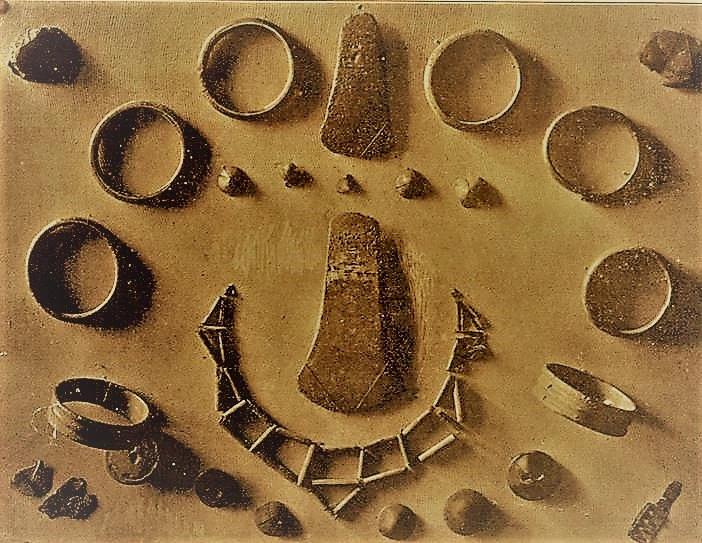
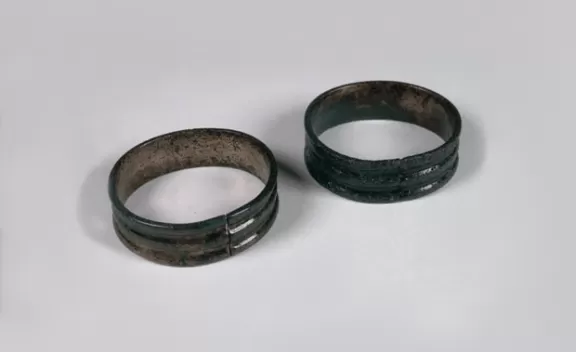
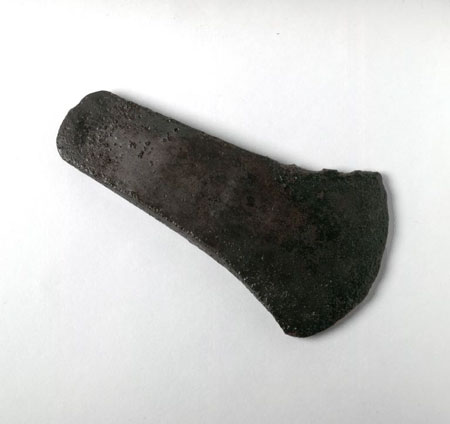
The discovery in May 1900 of a collection of ancient objects on a hillside above a lake in Sutherland, Scotland, is indeed remarkable and offers a glimpse into the past. The findings included a bronze hatchet, pieces of jewelry such as bracelets or anklets, six jacket buttons, and items that may have once been part of a headdress. These items, made mostly of bronze, carried significant value and were likely owned by a very important person.
The fact that some of the buttons were made from materials not found in Sutherland, but rather from distant locations like Whitby in Yorkshire, suggests a complex trade network and access to skilled craftsmen. Possessing such valuable objects would have signified the owner's wealth, power, and prestige, as well as their connections to broader trade networks.
The mystery lies in how these valuable items ended up hidden in a crack in the rock. There are several plausible explanations. It's possible that the region was not peaceful during the Bronze Age, and the items were hidden during times of war or raids to protect them from falling into enemy hands. Alternatively, the owner might have intended to return for them but met an unfortunate fate, such as being killed in battle, captured, or enslaved.
Another theory, proposed by archaeologists at the National Museum of Scotland, is that these items were offerings to the gods. In times of need, such as famine, illness, or attacks, the local community may have made offerings to the gods in the hope of receiving divine assistance or favor. These offerings could symbolize contrition for past wrongs or an appeal for positive outcomes, such as victory in battle or a bountiful harvest.
While the exact purpose behind hiding these objects remains a mystery, they provide valuable insights into the Bronze Age community of Sutherland and the cultural practices and beliefs of that time.
The discovery of the Bronze Age hoard in Migdale, Sutherland, provides intriguing insights into the interconnectedness of the people living there around four thousand years ago. The presence of a button made of jet, sourced from Whitby in Yorkshire, indicates that there were trade links between Migdale and distant regions. The exact nature of these trade links remains uncertain; people may have traveled by sea to the east coast to conduct trade, or they could have engaged in overland trade routes. Additionally, the exchange of valuable objects from person to person might have facilitated the dispersion of items over long distances.
The headdress and axe found in the hoard offer further evidence of the population's connections with Europe. Their designs exhibit similarities to styles seen in Central Europe, suggesting cultural influences and interactions. This aligns with other archaeological findings that suggest northeastern Scotland had connections with Central Europe during this period.
The discovery of the hoard was a significant event one hundred years ago when workers brought these valuable artifacts down the hill. They were subsequently sent to Edinburgh for study and have remained on display there, allowing modern-day observers to glimpse into the history and connections of the people who once inhabited Migdale during the Bronze Age.